Understanding Mental Fatigue in AAI ATC CBT
AAI ATC CBT is not a short sprint. It is a long cognitive endurance test involving:
• Continuous calculations
• High-focus Physics questions
• Logical reasoning under time pressure
• No long mental breaks
Mental fatigue doesn’t hit suddenly — it builds gradually, and most candidates don’t even realize when their accuracy starts falling.
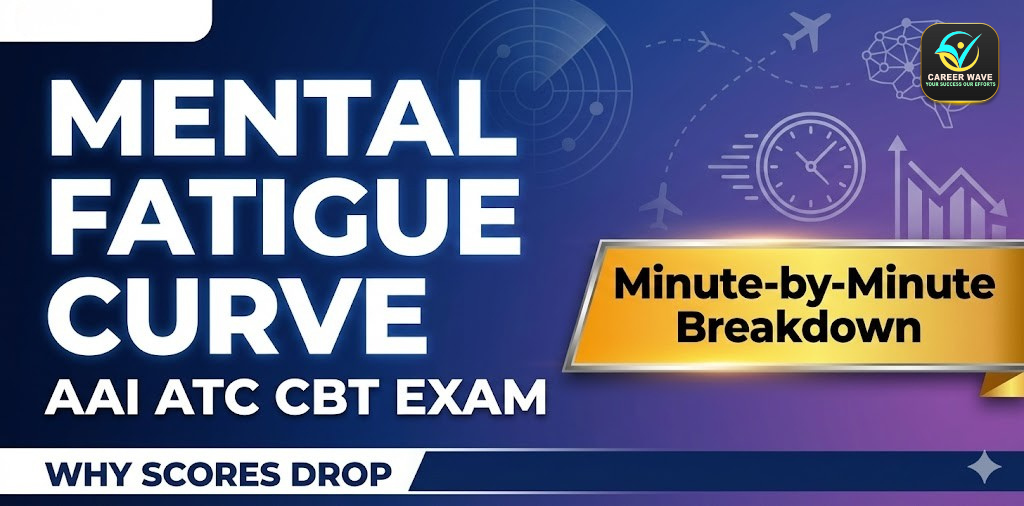
Minute-by-Minute Mental Fatigue Curve (CBT Breakdown)
0–20 Minutes: Peak Focus Zone
• Brain is fresh
• Confidence is high
• Speed and accuracy are at their best
Risk-taking feels easy
🔴 Common Mistake:
Wasting too much time trying to “perfect” early questions.
✅ Career Wave Tip:
Solve cleanly but don’t over-invest time. Momentum matters.
20–45 Minutes: Stable Performance Zone
• Focus remains strong
• Decision-making is logical
• Time pressure hasn’t kicked in yet
🔴 Hidden Risk:
Overconfidence → careless mistakes.
✅ Career Wave Strategy:
Double-check calculations once, not twice. Stay alert.
45–70 Minutes: Mental Load Begins
• Brain starts accumulating fatigue
• Longer calculations feel heavier
• Slight drop in speed
🔴 Typical Errors:
• Reading questions incorrectly
• Formula confusion
• Second-guessing correct answers
✅ Career Wave Insight:
This is where strategy matters more than knowledge.
70–95 Minutes: Fatigue Danger Zone
• Mental tiredness becomes noticeable
• Confidence fluctuates
• Panic thoughts may appear
🔴 Common Psychological Traps:
• “Time is running out”
• Random guessing without logic
• Revisiting already correct answers
✅ Topper Behavior (Career Wave Observed):
• Switch to accuracy-first mode
• Attempt only high-confidence questions
Last 20–30 Minutes: Decision Collapse Zone
• Brain is exhausted
• Accuracy drops sharply
• Emotional decisions increase
🔴 Why Many Scores Collapse Here:
• Overthinking simple questions
• Changing correct answers
• Blind guessing due to stress
✅ Career Wave Rule:
In the last phase, do not fight the brain — manage it.
Why Mock Scores Don’t Prepare You for This Fatigue
Most mock tests:
• Are attempted in relaxed environments
• Don’t simulate real CBT pressure
• Are stopped when tired
But the real AAI ATC CBT forces continuous performance without mental relief.
Career Wave emphasizes fatigue-aware practice, not just syllabus completion.
How Career Wave Trains Aspirants for Mental Endurance
At Career Wave, we focus on:
• CBT-length practice sessions
• Decision-making drills under fatigue
• Knowing when NOT to attempt
• Psychological error reduction techniques
Because AAI ATC is as much a mental exam as an academic one.
How to Control Mental Fatigue in AAI ATC CBT
✔ Smart Question Selection
Not all questions deserve your energy.
✔ Micro-Reset Technique
5–10 seconds of calm breathing between sections.
✔ Pre-decided Risk Rules
Avoid emotional guessing.
✔ Fatigue-Phase Awareness
Knowing which phase you are in prevents panic.
Frequently Asked Questions (FAQs)
1. Does mental fatigue really affect AAI ATC scores?
Yes. Career Wave analysis shows that most score drops happen due to fatigue-based mistakes, not lack of knowledge.
2. When does mental fatigue usually start in CBT?
For most candidates, it begins after 45–60 minutes, depending on mental stamina.
3. Can mocks fully prepare me for CBT fatigue?
Only if mocks are taken seriously in real-exam conditions and full duration.
4. Should I attempt all questions despite fatigue?
No. Smart skipping during fatigue phases improves final score.
5. How do toppers stay calm till the end?
They expect fatigue, plan for it, and don’t panic when it arrives.
Final Words from Career Wave
AAI ATC CBT is not just about how much you know — it’s about how long you can think clearly.
Understanding your mental fatigue curve can be the difference between:
• Selection and rejection
• Rank improvement and score collapse
📌 Prepare your mind, not just your syllabus — with Career Wave.