🚀 Rank Booster Strategy for Last 30 Days Before ATC Exam
Every serious AAI ATC aspirant reaches a point where the syllabus is almost complete.
You’ve studied concepts.
You’ve solved questions.
You’ve even started mocks.
But still, one question creates pressure:
👉 “Am I doing enough to actually get selected?”
Because here’s the truth most aspirants ignore:
Selection is not about preparation… it is about performance under pressure.
And performance is built in the last 30 days.
At Career Wave, we’ve consistently seen this:
👉 Students who improve in the last 30 days outperform those who only studied earlier.
🎯 1) The Biggest Shift: Knowledge → Execution
In the final month, your role changes completely:
Before | Now |
Learning concepts | Applying concepts fast |
Reading theory | Solving under time pressure |
Covering syllabus | Maximizing score |
👉 You are no longer preparing.
👉 You are training for a 120-minute battle.
⏱️ 2) Ultra-Detailed 30-Day Execution Plan
📅 Phase 1 (Day 30–21): Deep Strength Building
This is your foundation reinforcement phase.
What to do:
• Revise Physics + Maths core chapters
• Solve topic-wise PYQs (last 10–15 years)
• Identify high-weightage topics
• Start maintaining an Error Notebook
Daily Structure:
• 2–3 hours → Concept revision
• 2 hours → PYQs practice
• 1 hour → Error analysis
Focus Areas:
• Formula retention
• Accuracy improvement
• Reducing conceptual confusion
🎯 Outcome:
👉 Clear fundamentals + strong recall
📅 Phase 2 (Day 20–11): Performance Engineering
This is where real rank improvement begins.
What to do:
• Attempt full-length mocks (every alternate day)
• Practice sectional tests on weak areas
• Develop a fixed exam strategy
Post-Mock Analysis (Most Important):
Break your test into:
• Correct (Confident)
• Correct (Guess)
• Wrong (Concept error)
• Wrong (Silly mistake)
• Unattempted (Time issue)
👉 This classification is gold.
Track These Metrics:
• Accuracy %
• Attempt count
• Time per section
• Mistake types
🎯 Outcome:
👉 Stable and predictable performance
📅 Phase 3 (Day 10–1): Peak Optimization
This phase decides your final rank mindset.
What to do:
• Revise short notes + formulas
• Reattempt wrong questions
• Focus on confidence building
What NOT to do:
❌ Start new topics
❌ Watch random lectures
❌ Compare with others
Daily Routine:
• 1 light mock (or sectional)
• 2–3 hours revision
• Error notebook review
🎯 Outcome:
👉 Calm mind + sharp accuracy
⚡ 3) Advanced Rank Booster Techniques
🧠 3.1 The 80/20 Rule
Not all topics give equal marks.
👉 Focus on topics that:
• Are frequently asked
• Have predictable patterns
• Can be solved quickly
Example:
• Modern Physics → High scoring
• Formula-based Maths → Quick marks
• Reasoning patterns → Fast solving
👉 Smart selection of topics = Faster marks
🎯 3.2 Attempt Strategy Optimization
You don’t need 100% attempts.
You need optimized attempts.
Ideal Approach:
• First 30 minutes → Easy + direct questions
• Next 60 minutes → Medium level
• Last 30 minutes → Tough / revisit
👉 Golden Rule:
Skip fast. Return later. Don’t get stuck.
⏳ 3.3 Time Management Blueprint
Section-wise Strategy:
• English / Aptitude → 10–15 min (quick scoring)
• Reasoning → 20–25 min (pattern solving)
• GA → 5–10 min (quick recall)
• Physics + Maths → 60–70 min (core section)
👉 Always keep 5–10 minutes buffer for review
📊 3.4 Mistake Elimination System (Most Powerful)
At Career Wave, we follow a strict rule:
“Don’t solve more questions. Solve your mistakes.”
Create 3 Lists:
1. Repeated mistakes
2. Weak topics
3. Time-consuming questions
Weekly Action:
• Revise all 3 lists
• Reattempt those questions
• Track improvement
👉 This alone can add 15+ marks
❌ 4) Psychological Traps in Last 30 Days
🚫 Overconfidence Trap
“Mocks are going well, I’m ready.”
👉 Leads to:
• Less revision
• Careless mistakes
🚫 Panic Trap
“Others are scoring more than me.”
👉 Leads to:
• Random study
• Strategy breakdown
🚫 Resource Trap
“One more book / one more course…”
👉 Leads to:
• Confusion
• Zero mastery
👉 Solution:
Trust your plan. Stick to limited resources.
📈 5) Daily Rank Booster Routine (Highly Effective)
Follow this simple structure:
Daily:
1. 1 mock / sectional test
2. 1–2 hours deep analysis
3. 2–3 hours revision
4. 30 min formula recall
Night Reflection (5 min):
Write:
• One mistake I made
• Why it happened
• How I will fix it tomorrow
👉 This builds daily improvement loop
🔥 6) The Hidden Game: Accuracy vs Attempts
Most aspirants chase attempts.
Top rankers chase accuracy.
Example:
• 90 attempts at 65% accuracy → Low score
• 70 attempts at 85% accuracy → High score
👉 Final Rule:
Accuracy creates rank. Attempts only support it.
🧩 7) Final 3-Day Strategy (Most Critical)
Day -3 to Day -1:
• Revise only:
◦ Formulas
◦ Short notes
◦ Error notebook
◦ Sleep properly
◦ Avoid heavy study
Exam Day Mindset:
👉 Stay calm
👉 Don’t rush
👉 Trust your preparation
“The paper is not tough.
The pressure makes it tough.”
🏆 8) Career Wave Final Advice
At Career Wave, we believe:
“The last 30 days don’t test your knowledge.
They test your discipline, clarity, and decision-making.”
If you:
✔ Control mistakes
✔ Manage time smartly
✔ Maintain accuracy
👉 Selection becomes predictable.
❓ FAQs – Rank Booster Strategy for Last 30 Days
1. Is it possible to improve rank significantly in 30 days?
Yes.
Most rank improvements happen due to:
• Error reduction
• Better strategy
• Higher accuracy
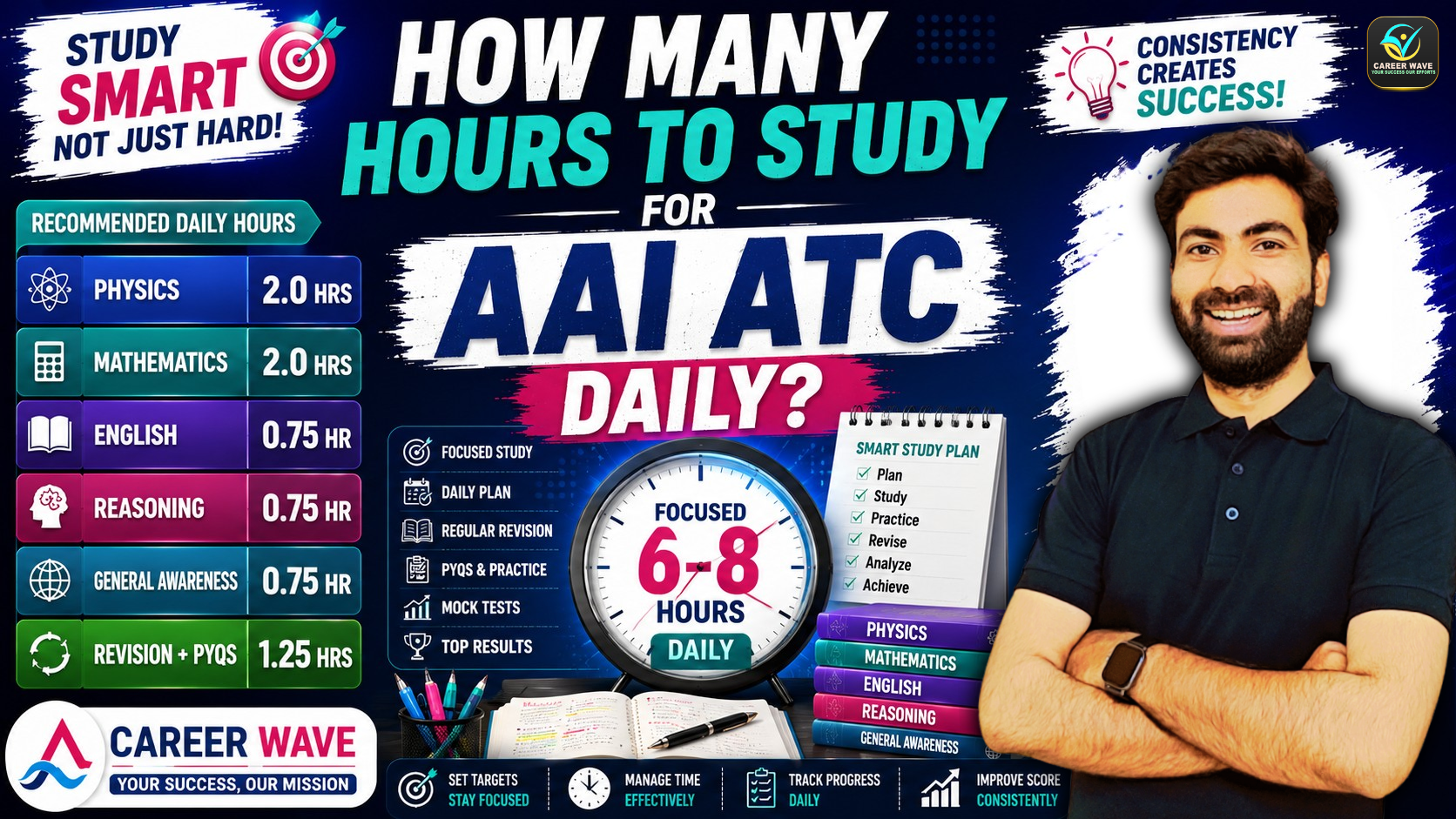
2. How many hours should I study daily?
Quality > Quantity
5–7 focused hours with analysis is enough
3. What if my mock scores are fluctuating?
Normal.
Focus on:
• Consistency in accuracy
• Reducing silly mistakes
Score will stabilize.
4. Should I focus more on Physics & Maths?
Yes.
They carry maximum weight
They decide your rank
5. What is the biggest mistake in last 30 days?
Ignoring analysis
Starting new resources
🎯 Final Takeaway
You don’t need more knowledge.
You need:
• Better decisions
• Faster corrections
• Stronger execution
Because in AAI ATC:
Selection is not about who studied the most.
It’s about who performed the best in 120 minutes.
Related Blogs -
The One Habit That Separates Selected vs Non-Selected ATC Aspirants
The Career Wave Attempt Strategy Framework
Why Students Plateau After 10 Mock Tests
The Right Way to Review a Mock Test (A Complete System for Real Improvement)