Maths for AAI ATC: What to Study & What to Skip (Deep, Practical Guide by Career Wave)
When students begin AAI ATC preparation, Maths often becomes the most confusing part.
👉 “Should I complete the whole syllabus?”
👉 “Which topics are actually important?”
👉 “How do I reach a safe score?”
At Career Wave, after detailed PYQ analysis and tracking student results, the conclusion is clear:
👉 AAI ATC Maths is not about syllabus completion
👉 It is about topic selection, pattern understanding, and accuracy execution
1) Role of Maths in ATC Selection (Critical Understanding)
Maths is a rank stabilizer and sometimes a rank booster.
Why Maths Matters:
• Direct and formula-based questions
• Less subjective than other sections
• High scoring with limited topics
• Repetition of patterns in PYQs
👉 Reality:
Students with:
• Strong Maths
• Decent Physics
👉 Almost always stay above cutoff
👉 Career Wave Insight:
Maths reduces uncertainty in your score
2) Exact Nature of ATC Maths Questions
Understanding this avoids wrong preparation.
ATC Maths is:
✔ Concept-based
✔ Moderate level (Class 11–12)
✔ Calculation-oriented
✔ Time-sensitive
ATC Maths is NOT:
❌ GATE-level
❌ Proof-based
❌ Highly tricky or lengthy
👉 Most questions are:
• Formula application
• Direct substitution
• Pattern repetition

3) What to Study (High ROI Topics)
Focus on maximum output topics:
🔹 Calculus (Backbone of Maths)
Topics:
• Limits & Continuity
• Differentiation
• Basic Integration
📌 Why:
• High frequency
• Direct formula application
• Strong scoring area
👉 Strategy:
• Learn standard formulas
• Practice common patterns
• Avoid deep theory
🔹 Probability (High Scoring Zone)
Topics:
• Basic probability
• Conditional probability
📌 Why:
• Easy to learn
• Quick solving
• Repeated questions
🔹 Matrices & Determinants
Topics:
• Matrix operations
• Determinants
• Inverse
📌 Nature:
• Direct formula-based
• Time-saving in exam
🔹 Vector Algebra
Topics:
• Dot product
• Basic vector operations
📌 Importance:
• Conceptual but easy
• Frequently asked
🔹 Coordinate Geometry
Topics:
• Straight lines
• Circles
📌 Requires:
• Practice + formula clarity
🔹 Complex Numbers
Topics:
• Modulus
• Argument
📌 Nature:
• Simple
• Pattern-based
📌 Golden Rule:
👉 Practice-based mastery > Theory-based study
4) What to Skip (Most Important Decision)
Top students succeed because they know what to ignore.
🚫 Avoid Advanced Topics
• Deep calculus (engineering level)
• Complex integration techniques
• Long derivations
👉 ATC does not test depth like GATE
🚫 Avoid Low-Frequency Topics
• Advanced 3D geometry
• Complex transformations
• Rare concepts
👉 Time invested ≠ marks gained
🚫 Avoid Over-Theory Learning
❌ Reading multiple books
❌ Memorizing formulas without practice
👉 Maths = Application subject
👉 Career Wave Insight:
Your rank depends more on what you skip than what you study
5) Accuracy vs Attempts (Real Game)
Many students believe:
👉 More attempts = more marks
But ATC reality is:
👉 Correct attempts = rank
Ideal Target:
• Accuracy: 85–90%
• Controlled attempts
Why Accuracy Matters:
• Reduces negative impact of mistakes
• Maintains confidence
• Keeps exam flow stable
👉 One mistake can disturb next 2–3 questions
6) Deep Study System (What Actually Works)
Follow this exact process:
Step 1: Concept Clarity
• Understand formulas
• Know application logic
Step 2: Topic-wise Practice
• Moderate-level questions
• Focus on accuracy
Step 3: PYQ Integration
• Identify patterns
• Build familiarity
Step 4: Revision System
• Short notes
• Formula revision
Step 5: Mock Application
• Time-bound solving
• Strategy testing
👉 Career Wave System:
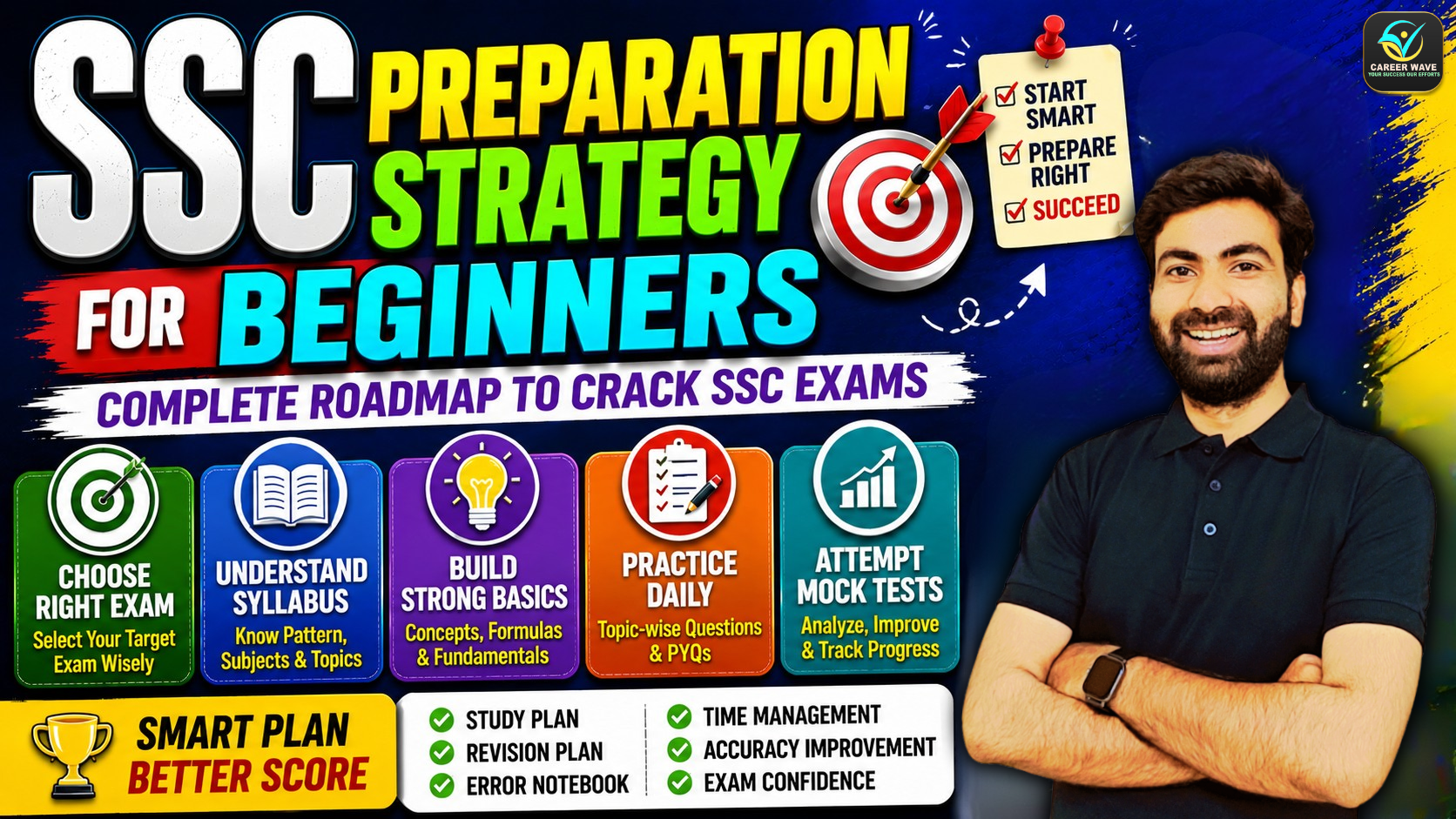
Concept → Practice → PYQs → Revision → Tests → Analysis
7) Time Management Strategy (Exam Perspective)
During exam:
• Easy → Attempt immediately
• Moderate → Solve carefully
• Tough → Skip initially
📌 Rule:
👉 If stuck for 30–40 sec → Move on
8) Error Tracking System (Hidden Advantage)
Maintain:
• Error notebook
• Weekly mistake review
Types of errors:
• Concept error
• Calculation error
• Silly mistake
👉 Improvement comes from error correction, not extra study
9) Common Mistakes Students Make
❌ Studying entire syllabus
❌ Ignoring PYQs
❌ Practicing without analysis
❌ Not revising formulas
❌ Over-attempting
✔ Correct Approach:
• Limited topics
• Deep practice
• Continuous revision
10) Career Wave Approach (Why Students Perform Better)
At Career Wave, Maths preparation is:
• ATC-focused
• PYQ-driven
• Concept + shortcut balanced
• Performance-oriented
👉 Students learn:
• What to study
• What to skip
• How to perform under pressure
Final Words from Career Wave
Maths is not difficult in ATC.
👉 It becomes difficult only when:
• You follow random strategy
• You study without direction
👉 It becomes easy when:
• You follow PYQs
• You practice consistently
• You focus on accuracy
FAQs
1. Is Maths tough for AAI ATC?
No, it is moderate level with proper strategy.
2. Do I need full syllabus coverage?
No. Focus on high-return topics only.
3. Which topics should I prioritize?
Calculus, Probability, Matrices, and Vectors.
4. How much time should I study Maths daily?
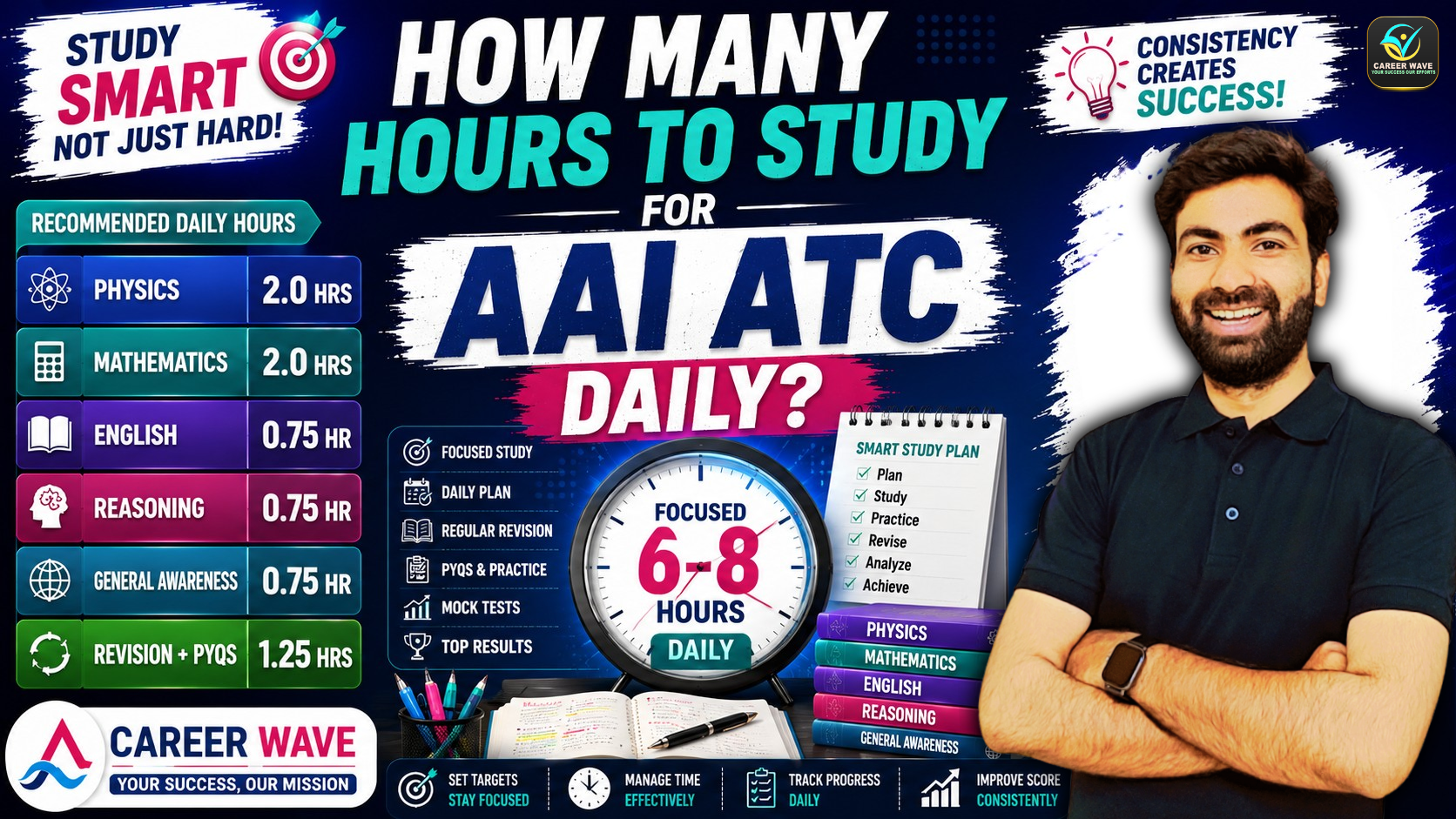
2–3 hours of focused practice.
5. Can I skip some topics?
Yes, but skip only low-weight topics.
6. How does Career Wave help in Maths?
Career Wave provides:
• Structured preparation
• PYQ-based teaching
• Mock + analysis system
• Accuracy-focused training
Conclusion
👉 Maths is your scoring weapon in AAI ATC
👉 But only if prepared strategically
Don’t study everything
👉 Study what matters
Focus on:
• High-weight topics
• PYQs
• Accuracy
• Revision
🚀 With the right system from Career Wave,
Maths can become your biggest advantage in ATC selection
Related Blogs -
Career Wave Selections in AAI ATC 2025
Complete Guide for Beginners Starting AAI ATC Preparation (Step-by-Step by Career Wave)
Category-Wise Strategy to Clear AAI ATC Exam – Complete Guide by Career Wave
Score vs Rank Analysis: How to Predict Your Selection (Human, Real Insight)