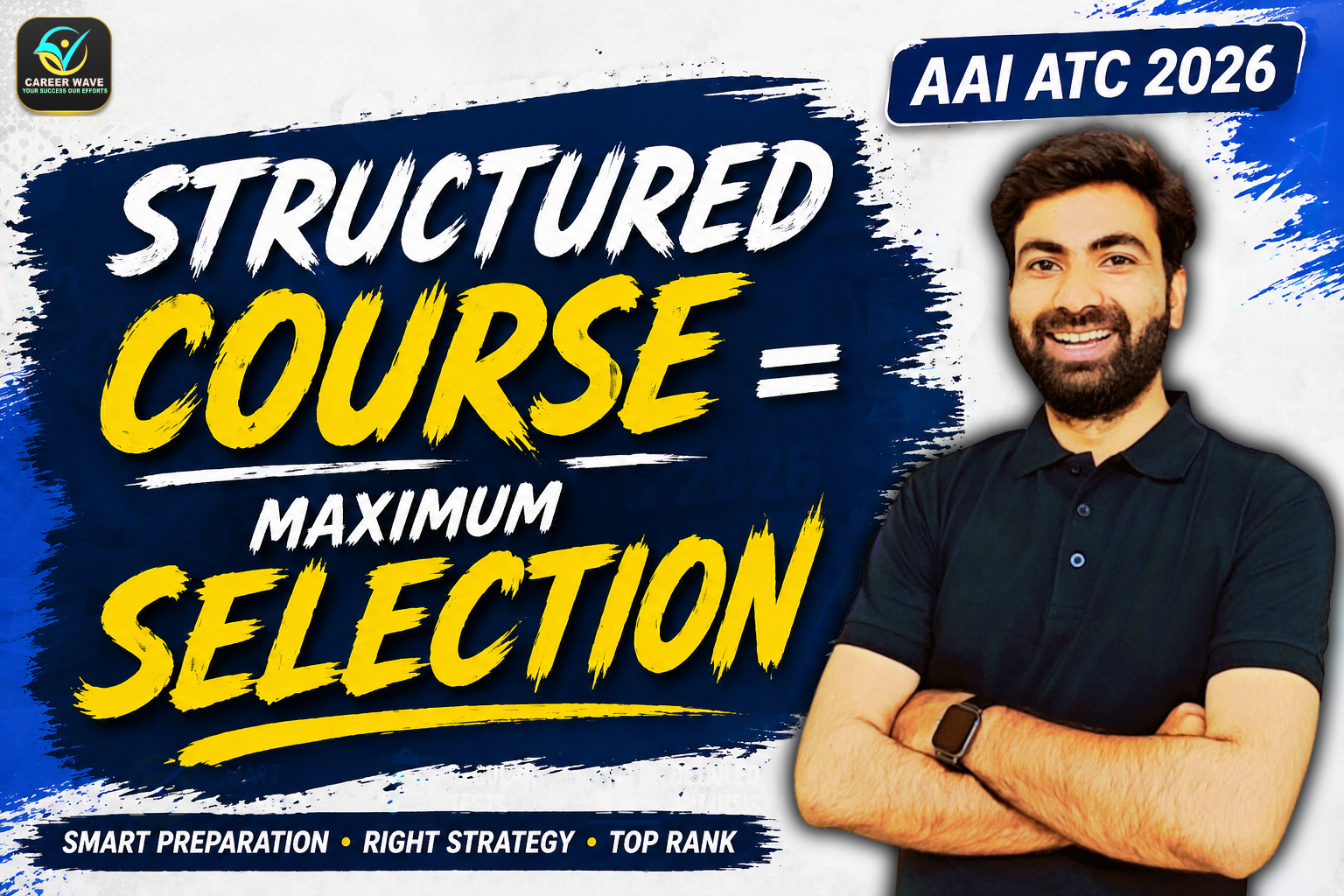
How Structured Courses Improve Selection Chances in AAI ATC
AAI ATC is not just a knowledge-based exam; it is a performance-based, time-bound, and accuracy-driven competition. Every year, thousands of aspirants prepare seriously, but only a small percentage convert their preparation into selection.
The difference is not intelligence.
The difference is structure in preparation.
1) What is a Structured Course? (Clear Definition)
A structured course is a scientifically designed preparation system where the entire syllabus is delivered in a pre-defined sequence, integrating:
• Concept learning
• PYQ-based application
• Practice progression (basic → advanced)
• Regular testing
• Performance analysis
• Planned revision cycles
The objective is not just completion of syllabus, but:
Conversion of knowledge into maximum correct attempts under exam conditions
2) Why Most Aspirants Fail Without Structure
Even serious students struggle due to:
2.1 Random Study Pattern
• Jumping between topics
• Ignoring weightage
• No clear roadmap
2.2 Weak Application
• Concepts understood, but not applied in questions
• Difficulty in solving under time pressure
2.3 Lack of Testing Discipline
• Few mocks or no analysis
• Same mistakes repeated
2.4 Poor Time Strategy
• Spending too much time on tough questions
• Panic in the final section
2.5 Last-Moment Collapse
• Revision incomplete
• Low confidence
Result:
Effort remains high, but marks remain unstable
3) How Structured Courses Systematically Improve Selection Chances
3.1 Syllabus Engineering & Direction Control
Structured courses break the syllabus into:
• Logical sequence (easy → moderate → advanced)
• Weightage-based prioritization
• Exam-relevant filtering
This ensures:
• No topic is left
• No unnecessary topic is over-studied
Outcome:
Maximum output with optimized effort
3.2 Concept → PYQ → Practice → Mastery Model
Each topic follows a fixed learning cycle:
1. Concept clarity
2. PYQ exposure (real exam pattern)
3. Practice questions
4. Difficulty escalation
This builds:
• Recognition speed
• Application strength
• Accuracy under pressure
Outcome:
Concepts become executable skills
3.3 Continuous Testing Ecosystem
Structured courses integrate:
• Topic-wise tests
• Sectional tests
• Full-length mocks
But the real value is in:
• Detailed analysis
Students understand:
• Where they lose marks
• Why mistakes occur
• How to improve
Outcome:
Data-driven preparation, not guesswork
3.4 Strategy Training for CBT Performance
AAI ATC is a game of selection, not just solving.
Structured courses train students in:
• 3-Layer Attempt Strategy
• Question prioritization
• Time allocation per section
• Skip vs attempt decision
Outcome:
Better decision-making in the exam hall
3.5 Time Management Conditioning
Time management is not learned in the exam, it is trained before.
Through repeated mocks:
• Speed improves
• Thinking becomes structured
• Panic reduces
Outcome:
Stable performance across full 2 hours
3.6 Built-in Consistency System
Structured courses enforce:
• Daily study targets
• Weekly progress tracking
• Regular class schedule
This prevents:
• Long breaks
• Loss of momentum
Outcome:
Consistent preparation till exam day
3.7 Multi-Layer Revision System
Revision is where most selections are won.
Structured courses provide:
• Short notes & formula sheets
• Quick revision modules
• Multiple revision cycles before exam
Outcome:
High recall + faster solving speed
3.8 Mentorship & Error Correction
Guidance ensures:
• Early correction of mistakes
• Right study direction
• Emotional stability during preparation
Outcome:
Reduced chances of failure due to wrong approach
4) Career Wave Structured System (AAI ATC Focused)
At Career Wave, structured preparation is not generic—it is built specifically for AAI ATC:
Key Features:
• Complete coverage of Physics, Maths, and Non-Tech
• PYQ-first teaching approach
• Weekly mock tests + deep analysis
• Strategy sessions for CBT performance
• Dedicated doubt-solving system
• Continuous mentorship support
Preparation Flow at Career Wave:
Concept → PYQ → Practice → Test → Analysis → Improvement → Selection
Result:
• Higher accuracy
• Better time control
• Strong exam confidence
Real Difference: Structured vs Unstructured
Unstructured Preparation | Structured Course |
Random study | Planned sequence |
Weak application | Strong execution |
Irregular testing | Continuous evaluation |
Panic in exam | Controlled performance |
Uncertain result | Predictable improvement |
5) Final Conclusion
AAI ATC selection is not about:
• Studying more books
• Spending more hours
It is about:
• Studying in the right order
• Practicing in the right way
• Attempting with the right strategy
Structured courses transform preparation into a:
Controlled, measurable, and result-oriented system
This directly increases:
• Accuracy
• Confidence
• Selection probability
6) FAQs
1. Is a structured course necessary for AAI ATC?
Not compulsory, but highly recommended for improving efficiency, consistency, and final performance.
2. Can self-study match structured preparation?
Only if it includes:
• Proper planning
• Regular testing
• Detailed analysis
Otherwise, structured courses are more reliable.
3. How do structured courses improve CBT score?
By improving:
• Concept clarity
• Question-solving speed
• Accuracy through analysis
• Strategy during exam
4. Do structured courses help in time management?
Yes. They train students through repeated mock environments and strategy sessions.
5. Why choose Career Wave?
Because it offers:
• ATC-focused structured content
• PYQ-based teaching
• Proven selection results
• Strong mentorship system
6. When is the best time to join?
As early as possible, to allow:
• Complete syllabus coverage
• Multiple revisions
• Enough mock practice
7. Does joining a course guarantee selection?
No. Selection depends on your effort and consistency.
However, structured courses maximize your chances by optimizing your preparation process.
Related Blogs -
AAI ATC Selection Process 2026 – CBT, Voice Test, Medical & Document Verification
Data-Driven Study Strategy Using Mock Scores