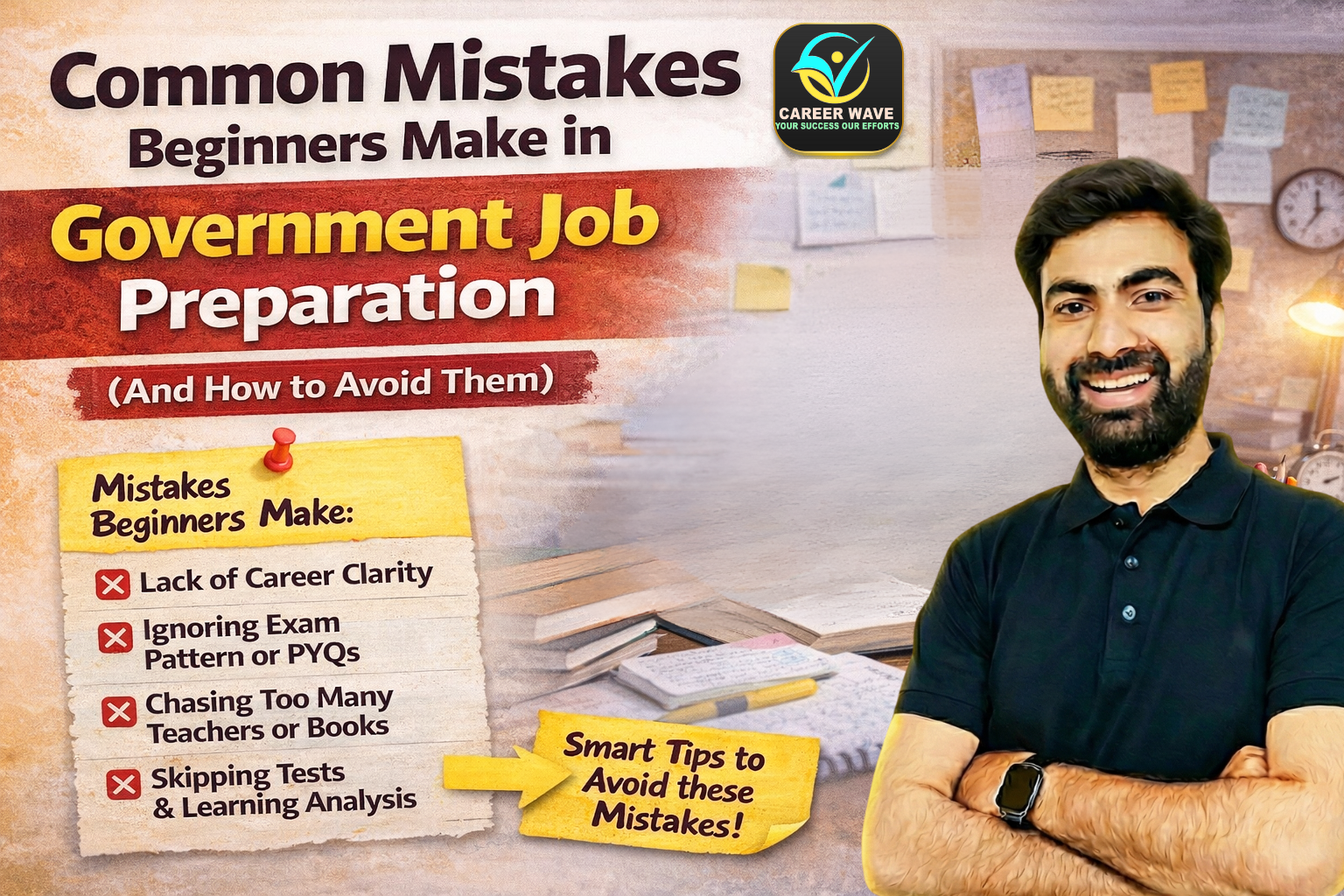
Common Mistakes Beginners Make in Government Job Preparation
(And How to Avoid Them)
Every year, lakhs of students start preparing for government jobs with big dreams and full motivation.
But after a few months, many feel confused, tired, or demotivated.
The reason is not lack of intelligence.
The real reason is avoidable beginner mistakes.
If you are just starting your preparation—or feel stuck midway—this blog will help you identify mistakes early and correct your direction.
This guide is written with one goal:
👉 So that you don’t repeat the mistakes most aspirants regret later.
Mistake 1: Starting Preparation Without Career Clarity
Most beginners start like this:
· “Let me prepare for everything.”
· “I will decide later which exam to target.”
This is the biggest mistake.
Why this is dangerous:
· Different exams have different syllabi
· Strategy becomes scattered
· You keep changing books and plans
What to do instead:
· Choose one primary exam
· Choose one parallel exam only
· Understand eligibility, syllabus, and exam pattern first
Clarity creates speed. Confusion creates delay.
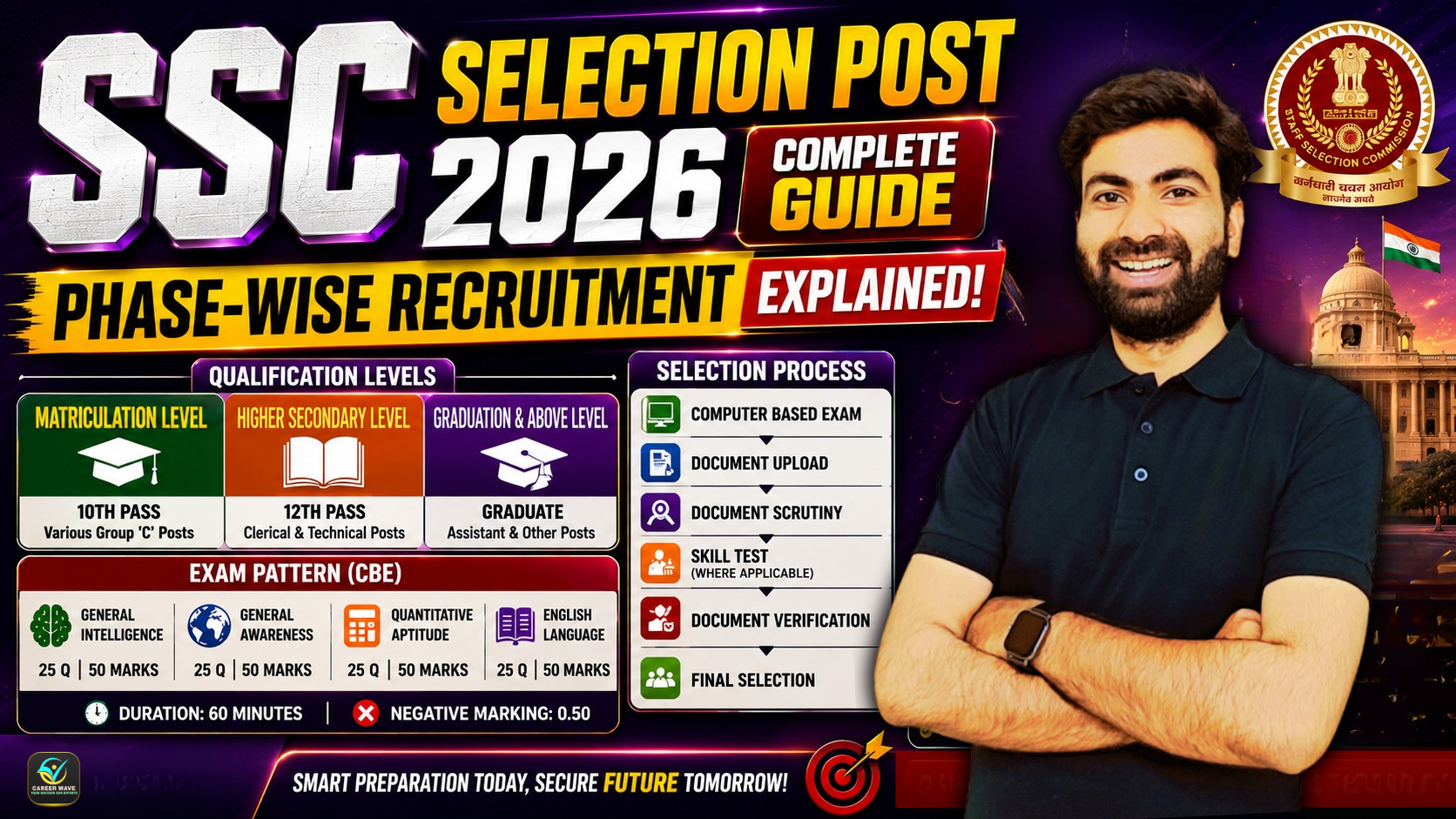
Mistake 2: Studying Without Understanding the Exam Pattern
Many students start reading books before understanding:
· How many questions are asked
· Which subject has more weightage
· How selection actually happens
This leads to:
· Over-studying low-weight topics
· Ignoring important areas
· Poor time management in exam
Correct approach:
· First understand:
o Exam pattern
o Section-wise weightage
o Selection stages
· Then start studying
You don’t need to study everything.
You need to study what the exam actually tests.
click here for NCERT Strategy for Government Exams
Mistake 3: Ignoring Previous Year Questions (PYQs)
Beginners often think:
· “First I will finish the syllabus, then PYQs.”
· “PYQs are only for revision.”
This is wrong.
Why PYQs are critical
· They show repeated topics
· They reveal exam trends
· They tell you what never comes
Smart strategy:
· Study topic → solve PYQs → revise → test
Books teach concepts.
PYQs teach selection patterns.
Mistake 4: Running After Too Many Books and Resources
A common beginner scene:
· 5 YouTube teachers
· 10 Telegram channels
· 6 books for one subject
Result?
· Confusion
· Incomplete syllabus
· No confidence
Better approach:
· One standard book per subject
· One trusted mentor or platform
· Fixed study sources
More resources don’t mean more preparation.
Focused resources mean faster progress.
Mistake 5: Over-Focusing on Easy Subjects
Many beginners:
· Spend too much time on GK, Reasoning, or English
· Avoid core or technical subjects because they feel difficult
This creates a false sense of progress.
Reality:
· Easy subjects help in score boosting
· Core subjects decide rank and selection
Correct balance:
· Maximum time → core subjects
· Smart time → easy sections
Avoiding weak areas does not make them disappear.
Facing them makes you stronger.
Mistake 6: Not Following a Daily Routine
Beginners often study:
· Random hours
· Only when motivation comes
· Long hours one day, nothing the next day
This kills consistency.
Ideal mindset:
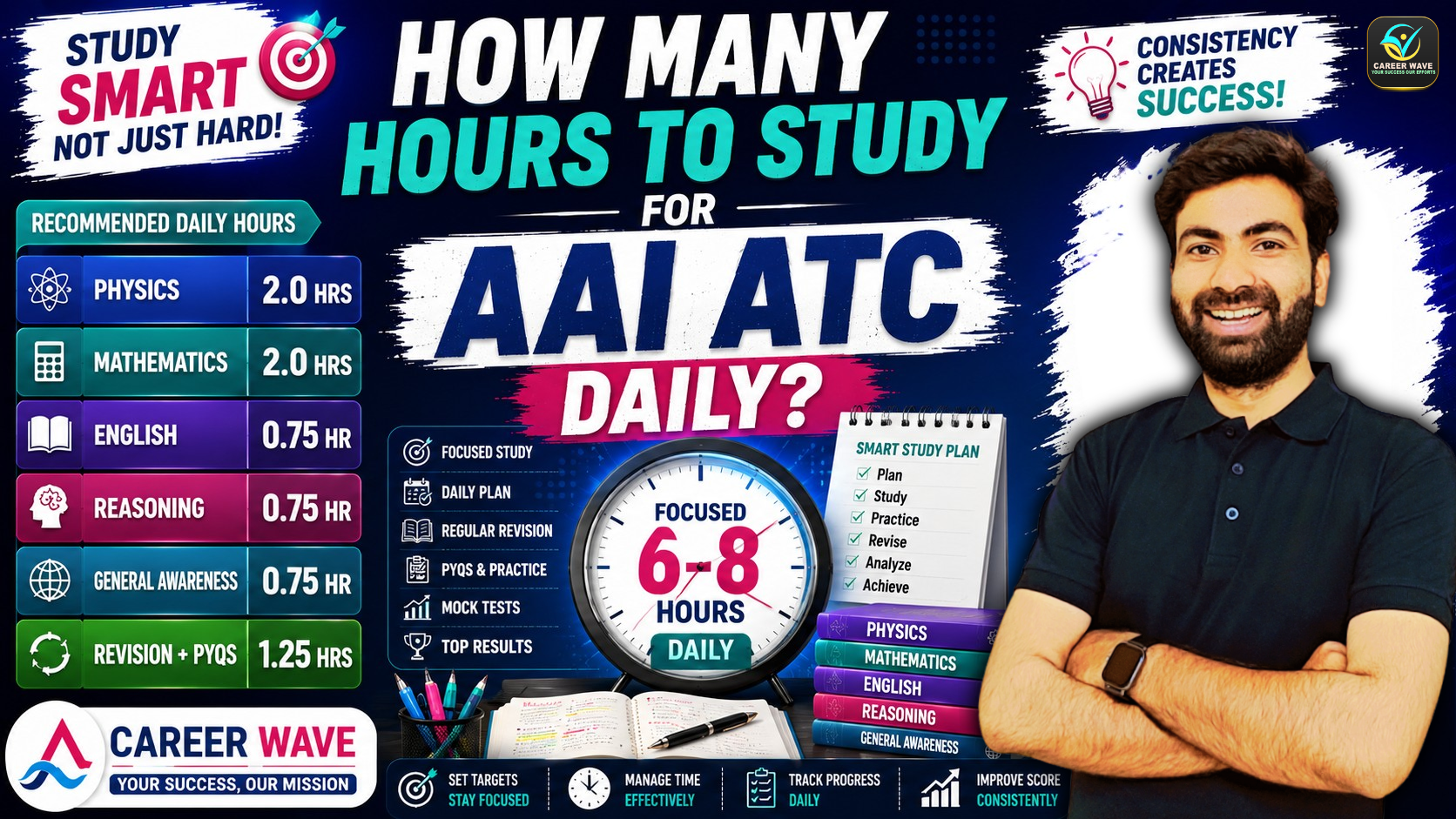
· You don’t need 10 hours daily
· You need 4–5 focused hours consistently
Simple daily structure:
· Core subject study
· PYQs practice
· Revision
· Short test or analysis
Consistency beats intensity—always.
Mistake 7: Skipping Tests and Analysis
Some students fear tests:
· “My score is low.”
· “I will give tests after full syllabus.”
This delays improvement.
Truth:
· Tests are not for judging
· Tests are for training
Smart testing:
· Sectional tests early
· Full-length tests gradually
· Deep analysis:
o Why wrong?
o Concept gap or time issue?
A test without analysis is a wasted test.
Mistake 8: Comparing Yourself with Others
One of the most damaging habits:
· “He started later but is ahead.”
· “She scores more than me.”
Comparison leads to:
· Self-doubt
· Anxiety
· Loss of focus
Reality check:
· Everyone’s background is different
· Everyone’s pace is different
Comparison kills confidence.
Focus builds careers.
Mistake 9: Waiting for Notification to Get Serious
Many beginners think:
· “I’ll study seriously after notification.”
This is risky because:
· Notifications are unpredictable
· Time after notification is limited
· Pressure becomes high
Successful aspirants:
· Prepare before notification
· Treat notification as confirmation, not starting point
Vacancies come for the prepared,
not for the worried.
Mistake 10: Losing Patience Too Early
Government job preparation is a long-term game.
Beginners often quit because:
· No quick results
· Slow progress initially
· Self-doubt
Remember:
· Progress is invisible before it becomes visible
· Strong foundations take time
You don’t need a topper’s brain.
You need a trained one.
Final Advice for Beginners
If you are starting today, remember:
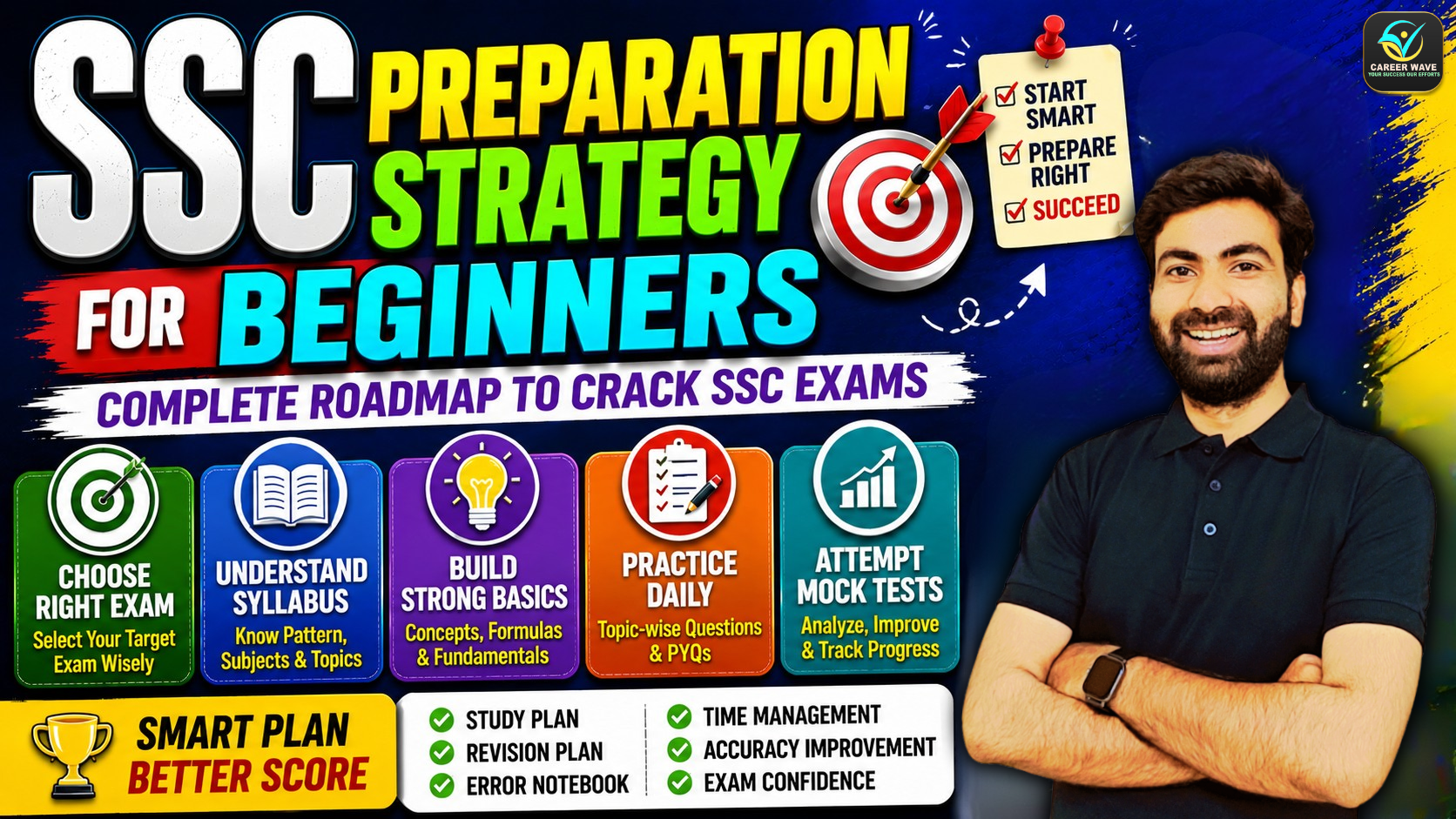
· Start with clarity
· Build strong basics
· Follow one strategy
· Stay consistent
· Trust the process
Government jobs are not cracked by luck.
They are cracked by systems, discipline, and patience.