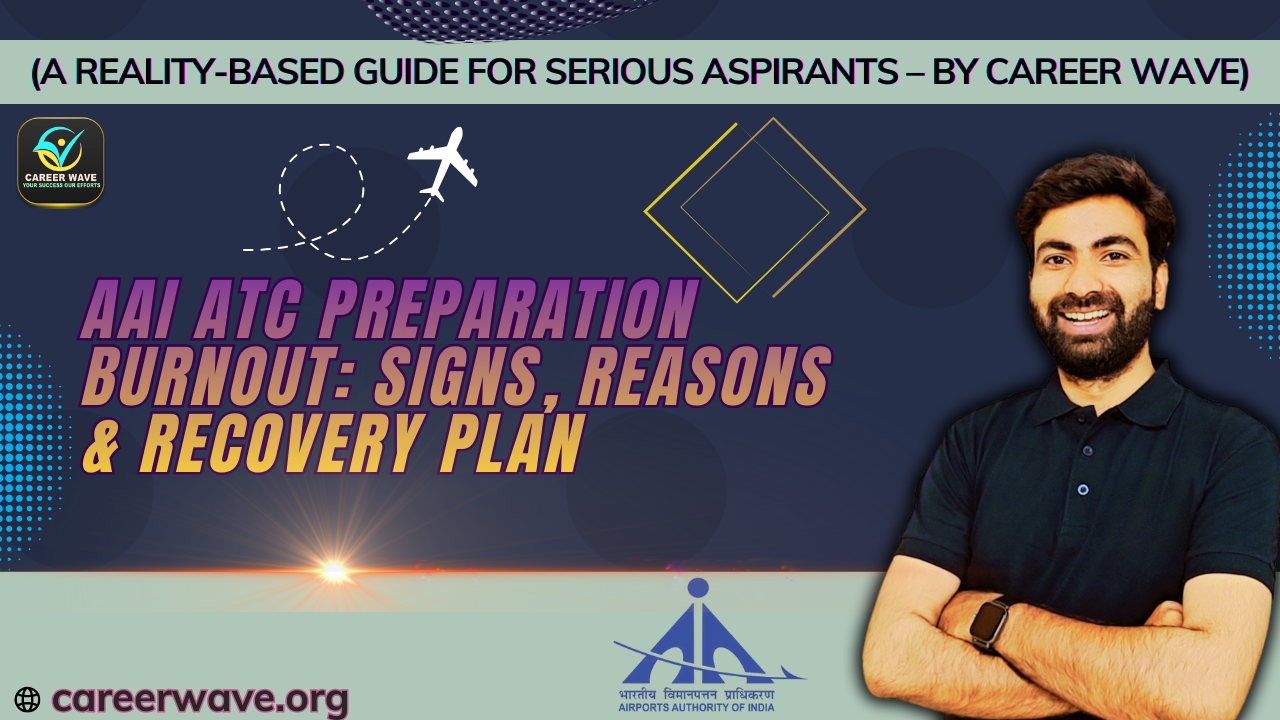
AAI ATC Preparation Burnout: Signs, Reasons & Recovery Plan
(A Reality-Based Guide for Serious Aspirants – By Career Wave)
Preparing for AAI ATC (Junior Executive – Air Traffic Control) is a long, demanding journey. Months of Physics, Mathematics, mock tests, revision, and constant comparison can slowly drain even the most motivated aspirant.
At Career Wave, we have observed a critical pattern:
Many aspirants don’t fail due to lack of intelligence or effort — they fail due to preparation burnout.
This blog helps you identify burnout early, understand why it happens, and follow a practical recovery plan to get back on track without wasting months.
What Is AAI ATC Preparation Burnout?
Burnout is not laziness.
Burnout is mental exhaustion caused by prolonged, unstructured pressure.
In AAI ATC preparation, burnout usually shows up as:
• Loss of focus
• Reduced accuracy
• Emotional fatigue
• Lack of motivation despite long study hours
📌 Important:
Burnout often appears right when your preparation should peak.
1) Early Warning Signs of AAI ATC Burnout
Career Wave students commonly report these signs:
1.1 Studying More but Scoring Less
• Increased study hours
• Declining mock test scores
• Frequent silly mistakes
👉 Clear burnout indicator.
1.2 Constant Topic-Hopping
• Switching topics daily
• Starting new chapters repeatedly
• Never feeling “done”
📌 This overload confuses the brain.
1.3 Revision Avoidance
• Avoiding revision sessions
• Feeling overwhelmed by notes
• Fear of mock tests
1.4 Mental & Physical Fatigue
• Headaches
• Poor sleep
• Irritability
• Lack of concentration
1.5 Emotional Symptoms
• Self-doubt
• Comparison with others
• Feeling “I’ll never clear this”
👉 These are not weakness signs — they are burnout symptoms.
2) Why AAI ATC Aspirants Burn Out (Root Causes)
2.1 No Clear Study Boundaries
Most aspirants:
• Study without end limits
• Never stop learning new topics
• Have no revision cycles
📌 Endless preparation leads to exhaustion.
2.2 Over-Preparing Extra Topics
As Career Wave repeatedly emphasizes:
Studying extra topics increases pressure but not marks.
More content = more confusion = faster burnout.
2.3 Delayed Mock Tests
Avoiding mocks:
• Creates exam fear
• Disconnects preparation from reality
• Increases mental pressure
2.4 Unrealistic Daily Targets
Planning:
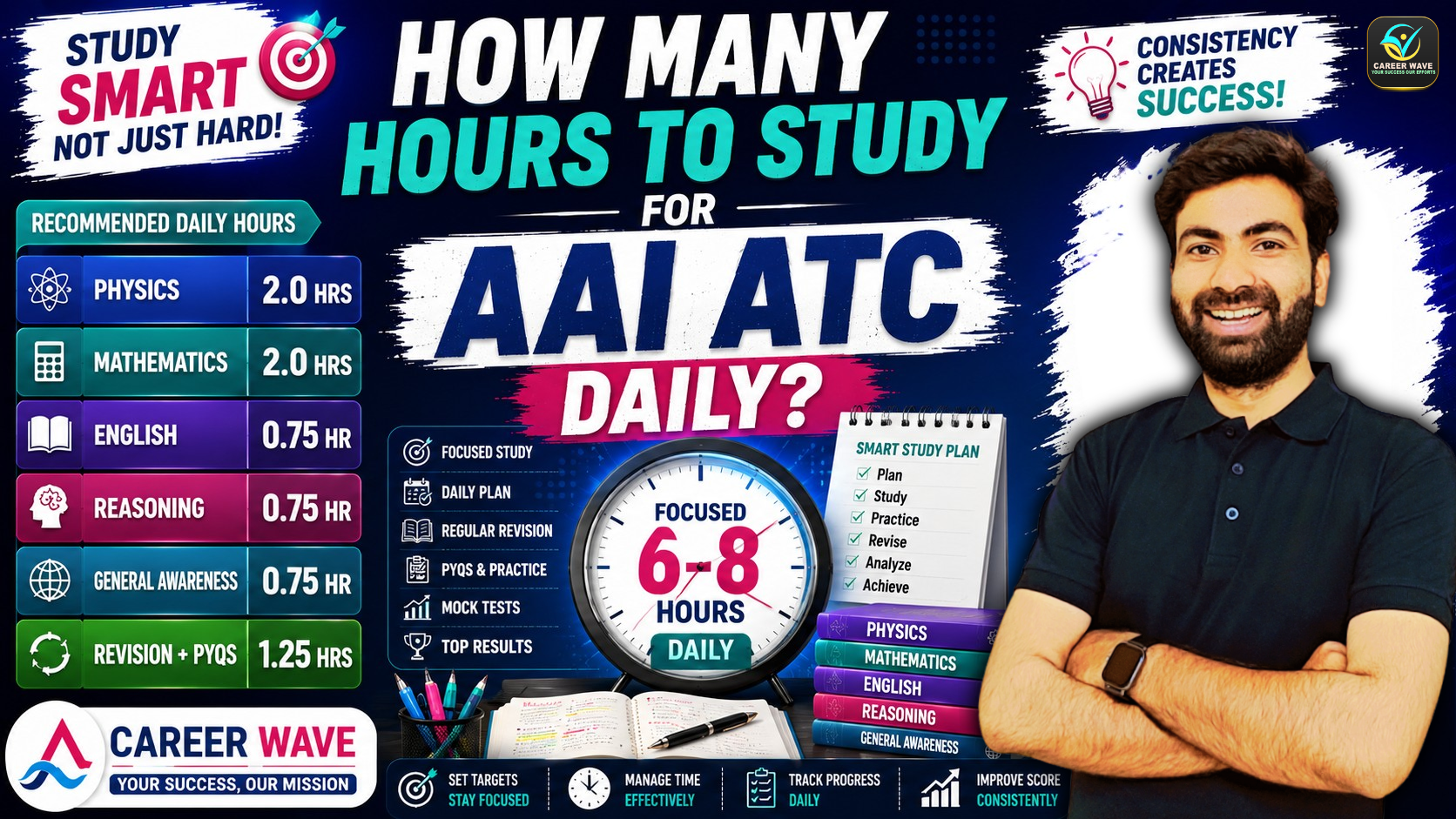
• 6–8 hours daily (unsustainable)
• Zero buffer days
📌 Consistency breaks when targets are unrealistic.
2.5 Comparing With Others
Social media, Telegram groups, and peer pressure:
• Distort progress perception
• Create anxiety
• Kill confidence
3) Career Wave’s Recovery Plan (Step-by-Step)
Step 1: Pause Without Guilt (2–3 Days)
• Stop heavy studying
• Sleep properly
• Light revision only
📌 Rest is part of preparation, not time waste.
Step 2: Reset Your Syllabus Scope
Career Wave rule:
Limit your syllabus to PYQ-dominated topics only.
• Drop low-frequency chapters
• Focus on high-weightage areas
Step 3: Switch to Revision-First Mode
Instead of learning new topics:
• Revise formulas
• Solve PYQs again
• Strengthen weak concepts
📌 Revision restores confidence quickly.
Step 4: Restart Mock Tests (Low Pressure)
• Start with sectional mocks
• Focus on accuracy, not score
• Analyze calmly
Step 5: Reduce Study Hours, Increase Quality
Career Wave recommends:
• 3–5 focused hours/day
• Fixed study slots
• Short breaks
👉 Quality beats quantity during burnout recovery.
4) How Career Wave Prevents Burnout in Students
Career Wave’s preparation system is designed to avoid burnout:
✔ Fixed syllabus boundaries
✔ PYQ-driven teaching
✔ Weekly revision cycles
✔ Balanced mock scheduling
✔ Mentorship support
✔ Honest guidance (no fear marketing)
📌 Students know where to stop — and that reduces pressure.
5) When Burnout Usually Happens (Critical Phases)
Career Wave data shows burnout peaks:
• After finishing syllabus
• During mock test phase
• 1–2 months before exam
👉 This is when guidance matters the most.
6) Final Words from Career Wave
✈️ AAI ATC is not a sprint.
It is a controlled, focused journey.
Burnout does not mean you are weak.
It means you are working without direction.
If you feel stuck, tired, or confused:
• Stop pushing blindly
• Start preparing smartly
• Seek clarity, not motivation
🚀 Recover, reset, and rise — with Career Wave.
Frequently Asked Questions (FAQs)
Q1. Is burnout common among AAI ATC aspirants?
Yes, very common.
According to Career Wave observations, burnout affects:
• First-time aspirants
• Repeaters
• Working professionals
Burnout usually appears when aspirants study without clear limits, especially during the mock-test or revision phase.
Q2. How is burnout different from laziness or lack of discipline?
This is an important distinction.
• Laziness = unwillingness to study
• Burnout = mental exhaustion despite wanting to study
Career Wave mentors often see highly sincere students experiencing burnout because of over-preparation and pressure, not lack of effort.
Q3. Can burnout reduce my final AAI ATC score even if I studied well earlier?
Yes. Burnout can:
• Lower accuracy
• Increase silly mistakes
• Reduce speed
• Affect decision-making in the exam hall
📌 Many capable students underperform due to burnout, not knowledge gaps.
Q4. When does burnout usually start during AAI ATC preparation?
Career Wave analysis shows burnout commonly occurs:
• After syllabus completion
• During continuous mock testing
• 1–2 months before the exam
This phase needs strategy correction, not more study hours.
Q5. Should I completely stop studying if I feel burnt out?
Not completely—but you must pause heavy learning.
Career Wave recommends:
• 2–3 days of light revision
• No new topics
• Proper sleep and mental reset
📌 Rest is part of smart preparation.
Q6. Will taking a break reduce my preparation level?
No. In fact, selected students guided by Career Wave report that short, planned breaks:
• Improve clarity
• Restore confidence
• Increase mock scores
Unplanned exhaustion is harmful; planned recovery is powerful.
Q7. What is the fastest way to recover from AAI ATC burnout?
Career Wave’s fastest recovery method:
1️ Stop adding new topics
2️ Revise core formulas
3️ Solve PYQs again
4️ Restart sectional mocks
5️ Reduce study hours, increase focus
📌 Recovery is about simplification, not expansion.
Q8. Can burnout be prevented from the beginning?
Yes. Career Wave prevents burnout by:
• Limiting syllabus scope
• PYQ-first teaching
• Fixed revision cycles
• Balanced mock frequency
• Mentorship and guidance
Students who follow a structured plan rarely burn out.
Q9. Does burnout mean I should postpone my AAI ATC attempt?
Not necessarily.
Career Wave advises:
• First try recovery and restructuring
• Focus on accuracy and revision
• Evaluate mock performance after reset
Many aspirants clear AAI ATC after recovering from burnout, not by postponing.
Q10. How does Career Wave support students facing burnout?
Career Wave provides:
✔ Mentorship support
✔ Study plan restructuring
✔ Confidence rebuilding
✔ Mock analysis guidance
✔ Emotional and strategic clarity
👉 You’re not alone in this journey.
Q11. Is burnout more common in repeaters?
Yes. Repeaters often:
• Carry past failure pressure
• Over-prepare to compensate
• Study without breaks
Career Wave specifically helps repeaters unlearn wrong habits and regain confidence.