Zero to Selection: Complete Roadmap for Government & PSU Jobs-career wave.org
(AAI ATC, AAI Common Cadre, SSC, PSU Technical & Non-Technical Jobs)
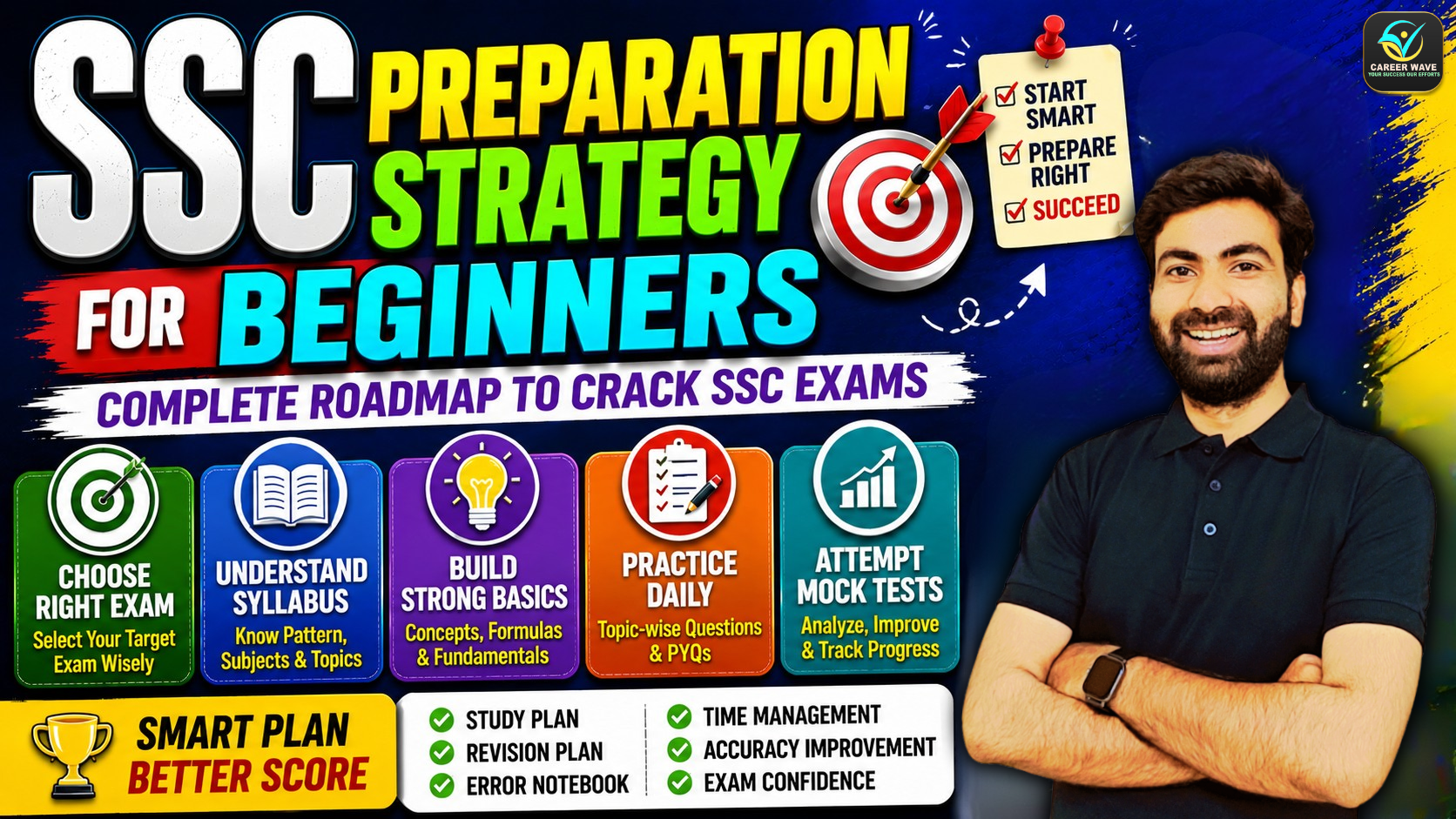
Starting preparation for government or PSU jobs from zero can feel overwhelming. The key is not intelligence or background, but clarity, structure, and consistency. This guide gives you a step-by-step roadmap used by successful aspirants at Career Wave.
Step 1: Choose Your Core Sector (First 7 Days)
Do not start preparation blindly. First, decide which sector suits you.
Choose based on your strength:
• Physics + Mathematics strong
→ AAI ATC, SSC IMD Scientific Assistant, DRDO
• Engineering background (Civil/Electrical/Electronics)
→ AAI Common Cadre, SSC JE, PSU JE
• General Studies oriented / Any Graduate
→ SSC CGL, State Government exams
Golden Rule:
👉 One primary exam + one parallel exam only.
Clarity creates speed. Confusion creates delay.
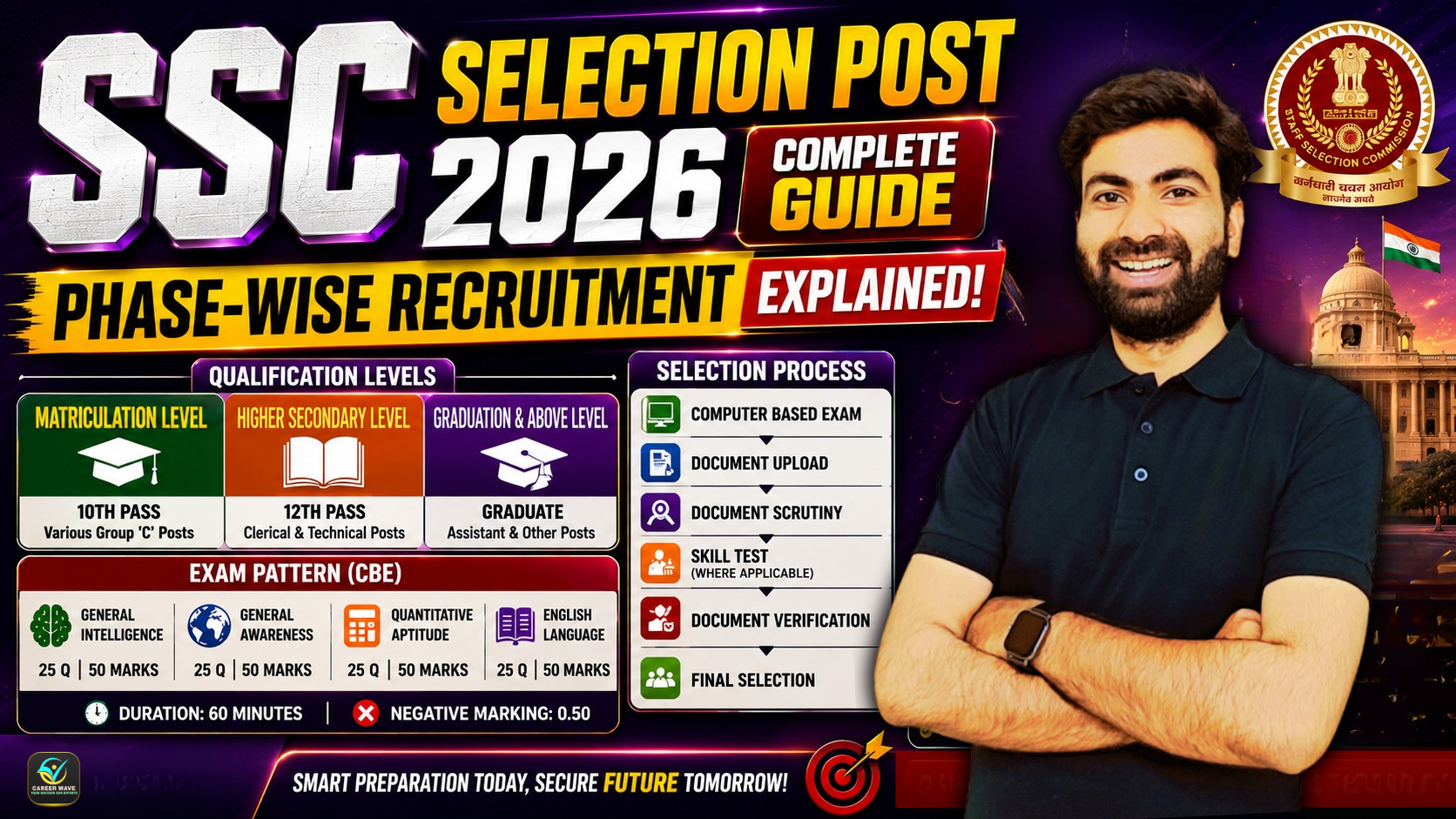
Step 2: Understand the Exam Before Studying (Week 1)
Before opening any book, understand:
• Exam pattern
• Subject-wise weightage
• Cut-off trends
• Selection stages
At Career Wave, students are first trained to understand
“how the exam works”, not just what to study.
You don’t need to study everything.
You need to study what gets selected.
Step 3: Build a Strong Foundation (Weeks 2–6)
If you are starting from zero, NCERT is non-negotiable.
For Technical Exams (AAI ATC / PSU):
• Physics: NCERT Class 11 & 12
• Mathematics: NCERT Class 11 & 12
For Non-Technical Sections:
• Quantitative Aptitude: Class 8–10 basics
• Reasoning: Daily practice (basic to moderate)
• English: Grammar + vocabulary
• General Awareness: Current affairs (15–20 min daily)
Career Wave Methodology:
Concept → PYQ → Revision → Test
Strong foundations outperform shortcuts.
Step 4: PYQs Are the Real Syllabus (Weeks 4–10)
Previous Year Questions (PYQs) tell you:
• What repeats
• What never comes
• What is high-weight
Study last 10–15 years PYQs, chapter-wise.
At Career Wave, every topic is linked directly with PYQs because:
Exams don’t test books.
They test patterns.
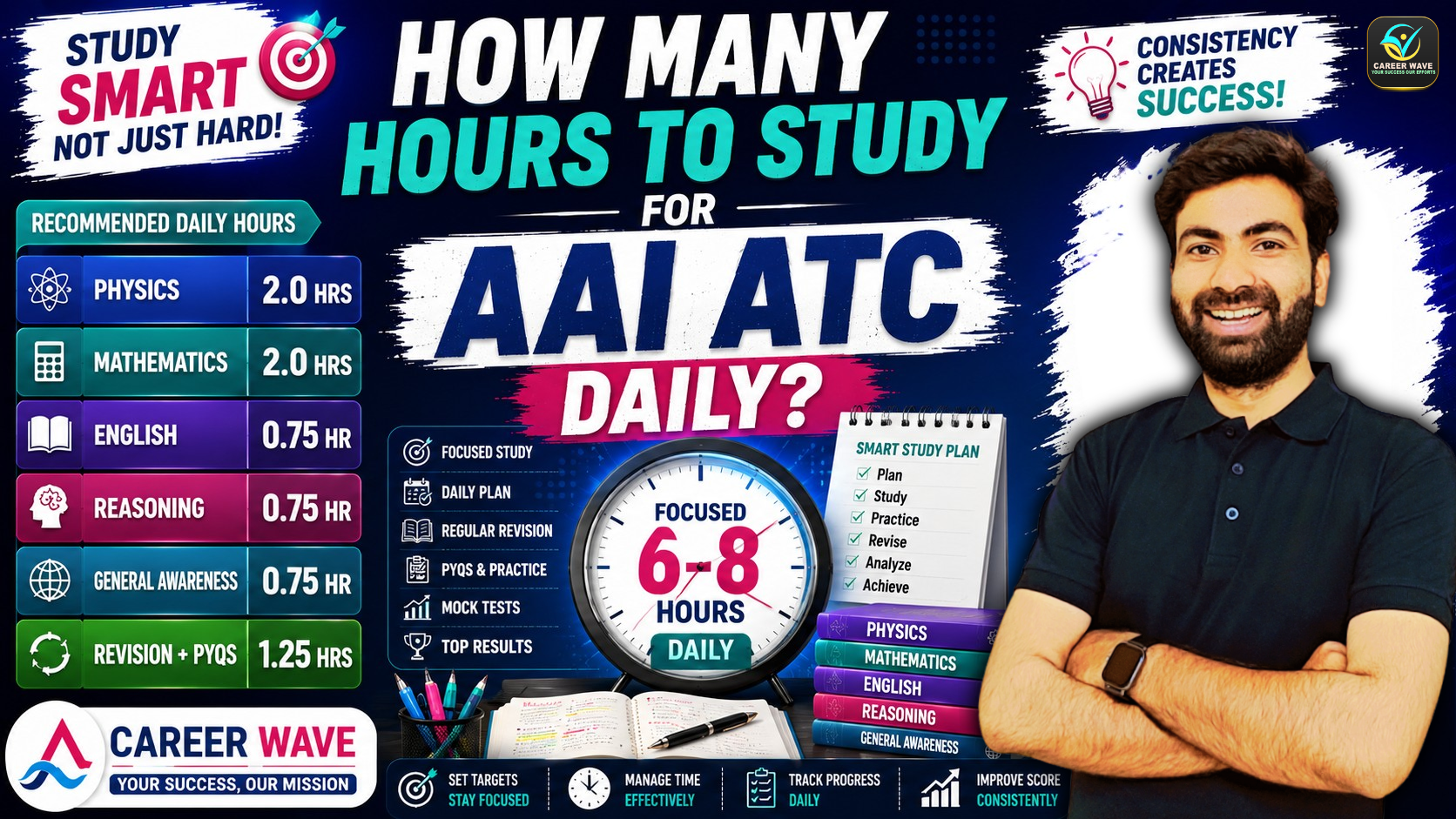
Step 5: Create a Practical Daily Routine
You don’t need 10 hours.
4–5 focused hours daily are enough if done correctly.
Ideal Daily Structure:
• 2 hours – Core subject
• 1 hour – PYQs
• 1 hour – Revision
• 30 minutes – Test / Analysis
Consistency beats intensity.
Step 6: Tests & Analysis (From Month 2)
Testing is not about marks; it is about improvement.
• Weekly sectional tests
• Monthly full-length tests
• Deep analysis:
o Why wrong?
o Concept gap or time issue?
At Career Wave, more importance is given to test analysis than test scores.
Tests don’t judge you.
They train you.
Step 7: Mentorship & Right Environment
• Follow one mentor, not ten
• Avoid Telegram noise and fake predictions
• Stop obsessing over “when will the vacancy come?”
Career Wave trains students to prepare independent of notifications.
Vacancies come for the prepared,
not for the worried.
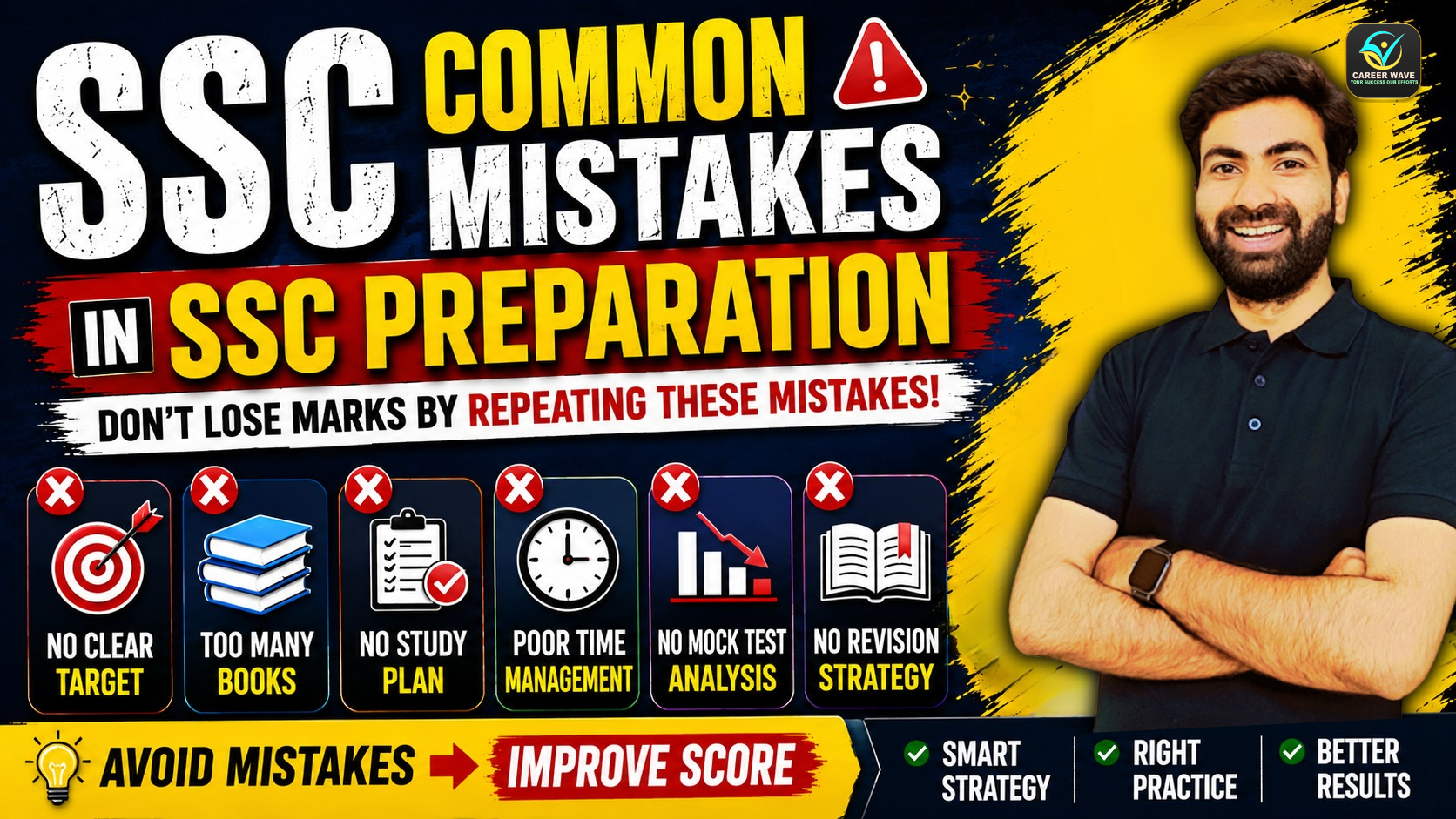
Common Mistakes Beginners Must Avoid
• Studying without PYQs
• Switching exams every week
• Over-planning and under-studying
• Comparing your Day-1 with someone else’s Year-3
Comparison kills confidence.
Discipline builds careers.
Final Motivation for Zero-Level Beginners
You don’t need a topper’s brain.
You need a trained one.
Government and PSU jobs are not cracked by luck.
They are earned through systems and discipline.
Start today.
Start small.
Stay consistent.
Career Wave exists for one purpose:
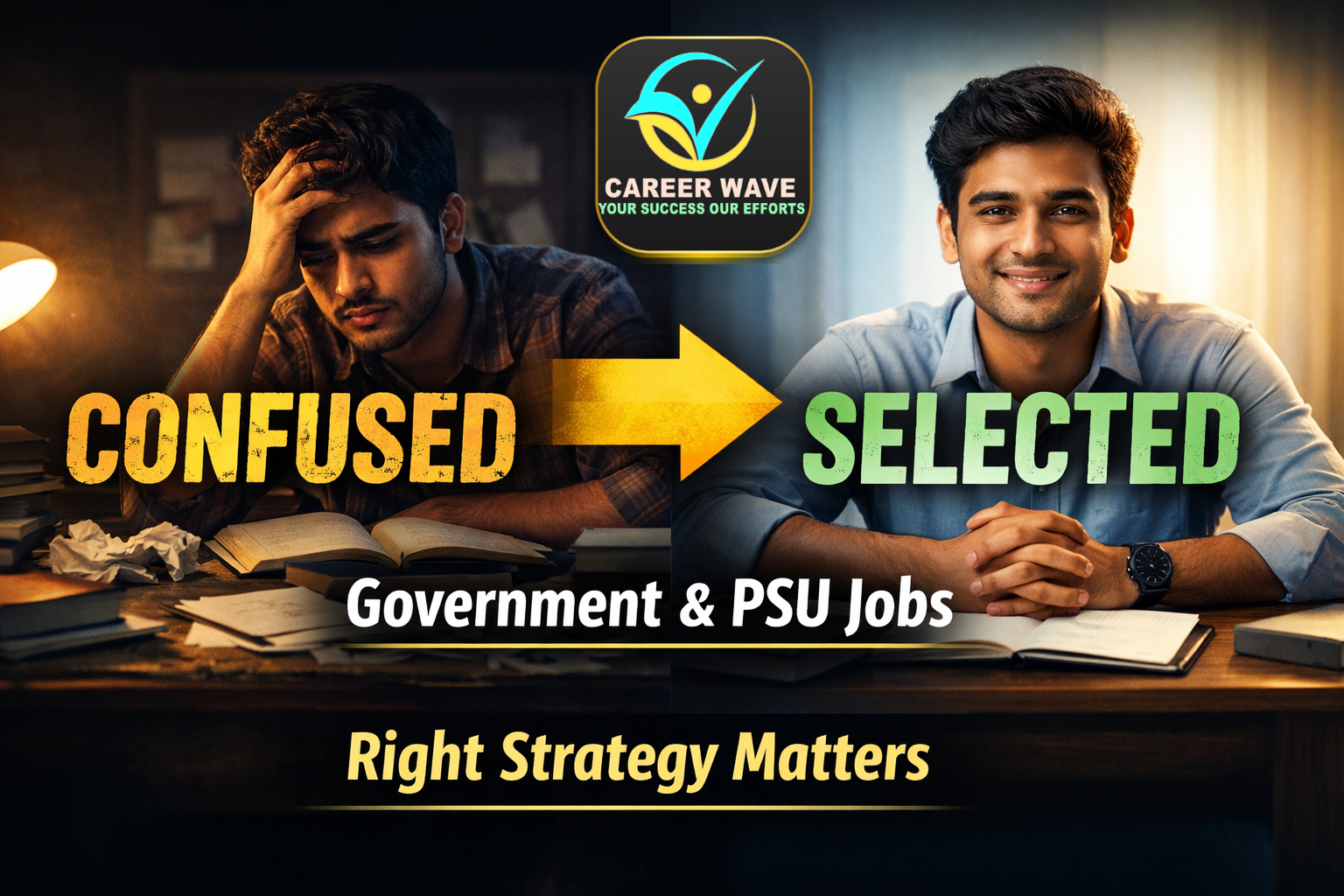
to turn confused beginners into confident officers.